

The island Hindu religious leaders are saddened to see more and more local people start wearing black clothing during Balinese traditional funeral ceremonies. This western tradition, mainly ‘imported’ through Hollywood movies, is against Balinese Hindu belief: death is not an end or punishment, rather a golden bridge to heaven, to begin a new life in a different, better […]

Called Pis Bolong in Balinese and uang kepeng in Bahasa Indonesia, these living relics render a ceremony celebration incomplete without their presence. Ancient Chinese coins with square holes in the center and Chinese characters on the sides are all over in Bali. The presence of coins in rituals has become somewhat compulsory. Meanwhile, the stock of coins has […]

Many Hindu rites and ceremonies take place in a temple setting and are directed toward a god or goddess, but by no means do all such rituals take place in the temple; indeed, many Hindu rituals are distinctly domestic affairs, taking place in individual homes. And certainly not all rites and ceremonies are directed toward the gods and […]
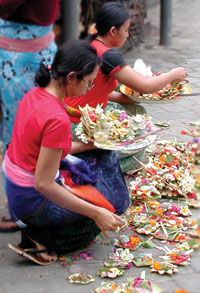
Canang Sari is one of Daily Balinese hindus people offerings made to thank the gods in praise and pray. You will see these offerings in the temples, on small shrines in houses, and on the ground or as a part of a large offering. The phrase canang sari is derived from the words “sari” (essence) and “canang” (a […]

The Barong Rangda have always been two sacred symbols among the Balinese Hindus, dances that are performed in consecration. But now with the passing of time, these two symbols’ functions have expanded into tourism ambassadors and are popular with tourists. The sacred Barong and Rangda are treated as sacred, but the commercial ones are also available to support […]
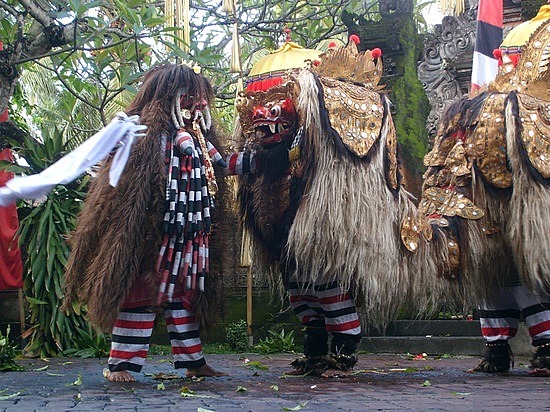
Barong Dance is probably the most well known dance. It is also another story telling dance, narrating the fight between good and evil. This dance is the classic example of Balinese way of acting out mythology, resulting in myth and history being blended into one reality. The barong is a strange creature, half shaggy dog, half lion, propelled […]

Arja Dance is a kind of Balinese theatrical performance, further development of Gambuh, the oldest theatrical performance in Bali. The word “arja” is derived from the word “reja” means “beauty”. The birth of Arja can be traced back to the year around 1175-1825 in the reign of Dewa Agung Sakti, the king of Klungkung.
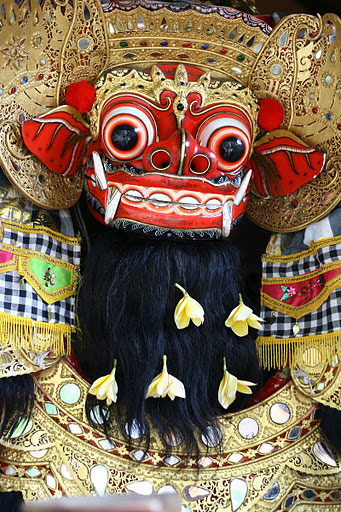
Barong is one of the characters in the mythology of Bali. He is the King who symbolizes the Spirit of Kindness and enemy of Rangda in Balinese mythology. According to belief, Barong is driven by a spirit named Banas Pati Rajah. The Spirit is also a spirit that accompany a child in her life. As a protective spirit, […]
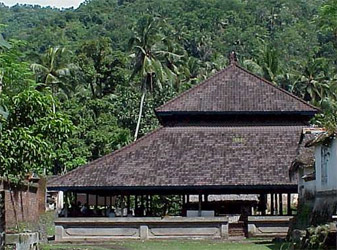
Banjar Balinese Community is a social unit based on territory unity. This social unity is strengthened by custom unity and sacred religious ceremonies. In the mountain range area, the characteristic of banjar membership is limited only to those who were born in the banjar territory. Whereas in the plain area the banjar membership is open to the public […]
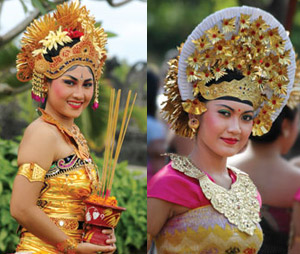
Let’s take a look and give praise to the unique feminine figure of Balinese women, coinciding with the commemoration of the birthday of Indonesian national heroine Kartini on April 21. Many cultural observers have considered Balinese culture as the perfect form of a social model, with every member of the community playing a significant part within the social […]

Unexpected rainfall is one of the oldest traditions in Balinese cultural practices, which can also be found in most societies in Java. This tradition is still practiced by the Balinese, because of its significance and function, not only within traditional, but also within a modern context, such as tourism activities. These beliefs and practices are not aimed against […]

The Balinese Names which come from the Sudra caste basically only have four names. The first child is called WAYAN . The second child is called MADE The third is called NYOMAN The fourth is called KETUT