
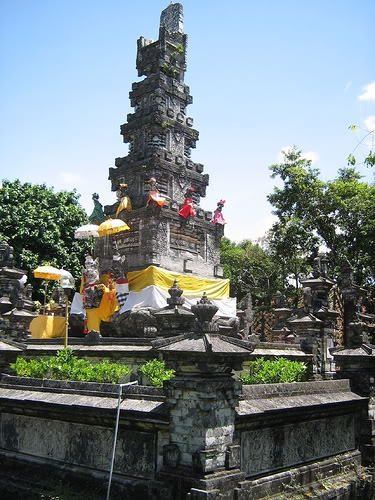
Padmasana is a shrine to the Hindu people of Bali to worship the Almighty God (Ida Sang Hyang Widhi Wasa). Although Hindu religion in Bali is from India, but the Balinese combined it with the breath of the original Balinese ancient believes. Padmasana is the symbol and image of the macrocosm or universe (Bhuana Agung). This shrine can […]
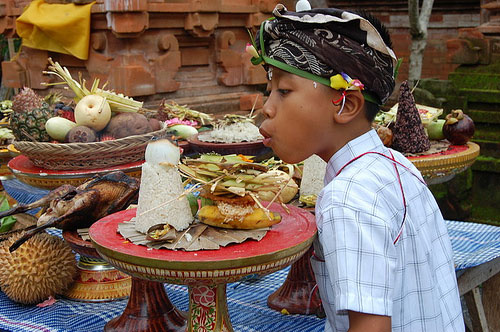
Otonan or Ngotonin is a ceremony commemorating the birthday of one year based on Wuku, 6 (six) months times 35 days = 210 days. The fall day of Otonan will coincide with Sapta Wara, Panca Wara, and Wuku. Otonan ceremonial purposes is to give thanks to Hyang Widhi for the gift of longevity, as well as please the […]
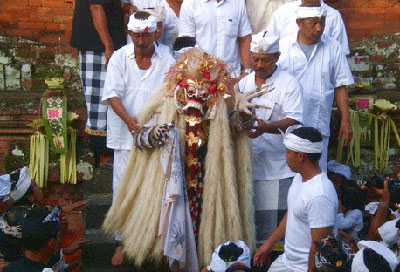
Introduction ‘Ngereh‘ is a mystical ritual procession carried out in the middle of the night and it was the final stage of the ‘sacralized’ process Rangda, or Barong and Barong Landung masks. This is the final stage of the process to rehabilitate old or damaged mask. The meaning of ‘Sacralize’ is activities to empowerment the wooden mask into […]

The towering Meru with its tiered sugar palm fiber roofs and elegant silhouette is the prima ballerina of many temple courtyards. This Balinese pagoda, a shrine to the higher deities, always has an odd number of roofs, with a maximum of 11.
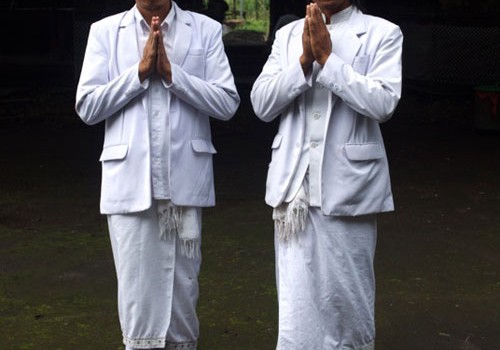
Men Temple Cloth wear a Kain Kamben wrapped around from the waist down covering the legs and rolled around the waist and tied with a flourish, the long fold falling between the legs and nearly reaching the ground.
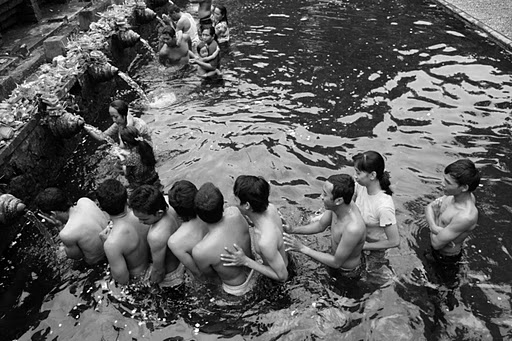
Understanding ‘Melukat’ ‘Melukat’ is part of the Manusa Yadnya (holy sacrifice which dedicated to human being) ceremony . Melukat aims to cleanse and purify the human body and soul in order to preventing from havoc, bad luck and sickness. The havoc caused by acquired activities and sins, whether originating from the remainder of the previous acts (in the […]

The Balinese people believe that all their daily life active is connecting to the Melaspas and Mecaru after finishing the new home, which is implementation their sacrifice (Yadnya) and to implementation the thanks to the Almighty God, where the form by doing upakara has they own purpose with many kind of offering to the god in form of […]
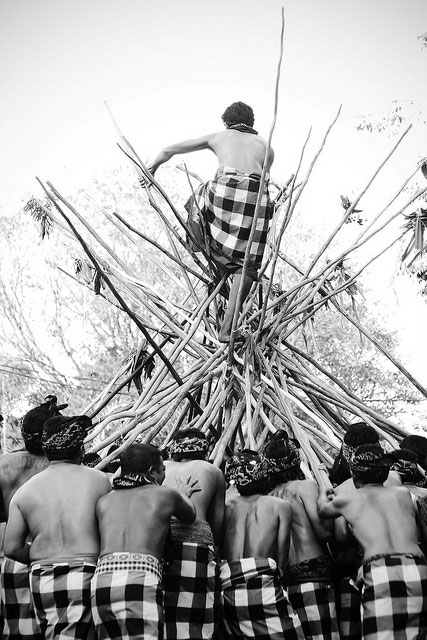
One of the unique tradition in Bali, where thousands of people from each “Banjar” in the Munggu, Badung participate by bringing the wood along the 3.5 meter, this tradition called “Mekotek”. Mekotek itself derived from the word-tek tek which is the sound of wood that pitted one another.

This type of gate/ Kori Agung is said to show the reunion of the halves of the Candi Bentar. Shrines for offerings often flank such gates.
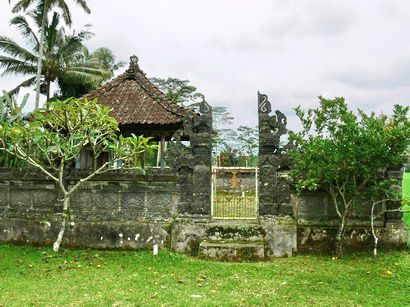
Functional Temples have special characteristic of which the people (the caretaker of the temple) are those who have the same profession for their living such as; farmer, trader and fisherman. Examples of Functional Temples are as follows : a. In Bali farming is one of main jobs to earn a living both for rice field and farm. Having […]

Ancestors are very important to the Balinese. Each Balinese family has a Family Temple to worship God Almighty and glorify the ancestor and of course, in this family temple ancestors worship is given a great emphasis. The Family Temple is usually situated in the kaja-kangin corner – kaja being in the direction of the holy Gunung Agung, kangin […]

Candi Bentar is arch-shaped building term for two similar buildings and unvarying but a mirror symmetry that restricts the left and right of the entrance. The temple has no roof liaison briefly at the top, so that the two sides apart perfectly, and only connected at the bottom by the stairs. The building is commonly called “split gate”, […]